
Prunes vs. Raisins: Which Is Better for Food Manufacturers
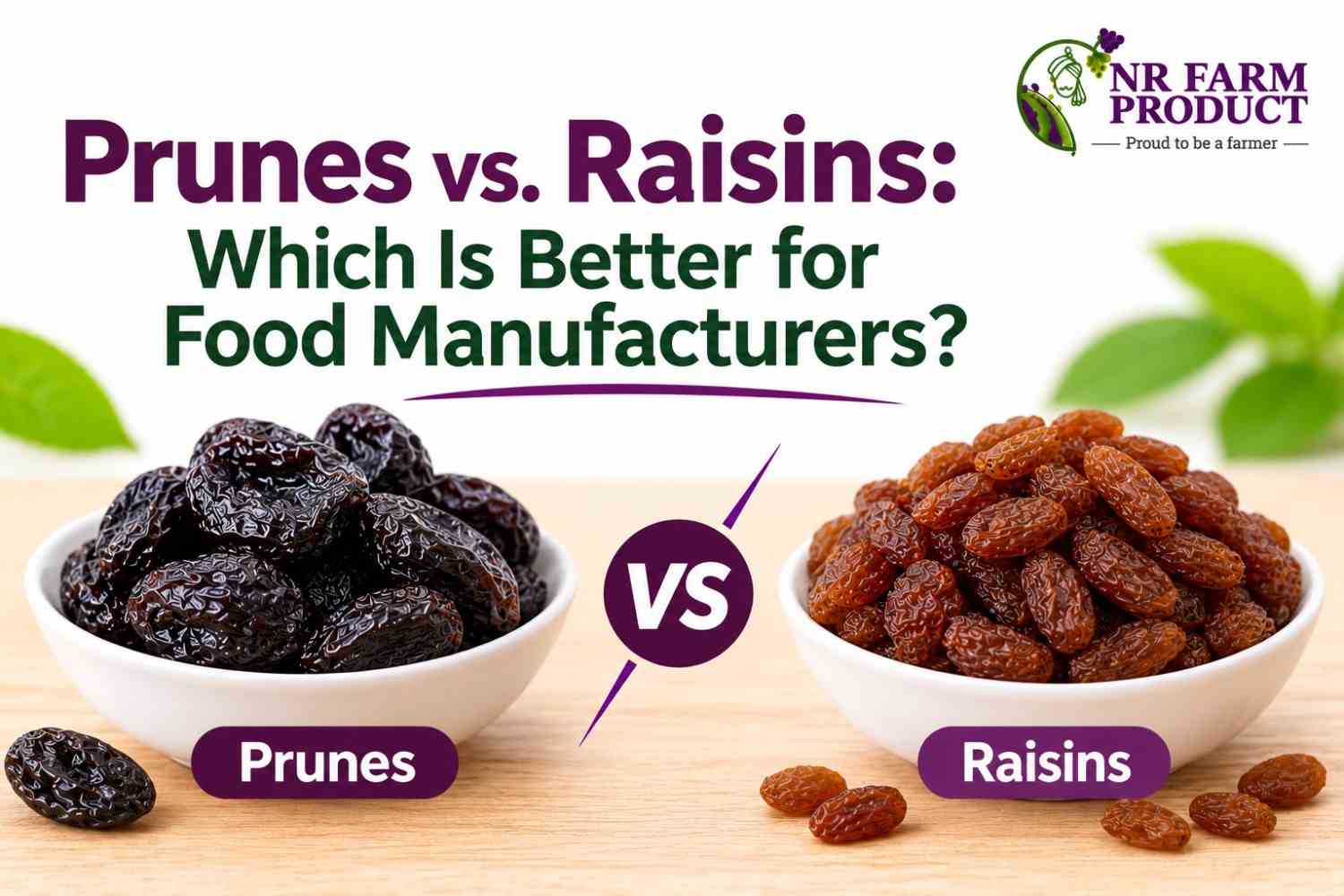
Prunes and raisins are both popular dried fruits used in food manufacturing, but they differ in texture, sweetness, flavour and processing characteristics. Prunes are dried plums with a soft, chewy texture, while raisins are dried grapes available in different colours and varieties. The better option depends on the final product and its formulation.
For food manufacturers, choosing between prunes and raisins involves more than taste. Factors such as moisture content, texture, size, sweetness, consistency and bulk availability can affect how each ingredient performs in bakery products, snack bars, breakfast cereals, granola and confectionery.
In this blog, we will explore prunes vs. raisins, compare their nutritional values and benefits, and examine their uses across different food applications. We will also cover the key factors manufacturers should consider when selecting dried fruits for commercial production.
What Are Prunes?
Prunes (सूखा आलूबुखारा) are dried plums, usually produced from varieties suited to drying. They typically have a dark colour, a soft texture and a naturally sweet flavour. Their moisture and texture make them useful in products that need a soft fruit ingredient.
Food manufacturers use prunes in selected bakery products, fruit fillings, snack bars, confectionery and processed foods. They may be supplied whole, pitted, chopped or in paste form, depending on the application and supplier.
Benefits of Prunes
Prunes offer several nutritional and functional benefits, making them a useful ingredient in different food products. Key benefits include:
- Dietary fibre: Prunes contain fibre, which supports normal digestion.
- Natural sweetness: Their naturally sweet taste can add sweetness to food formulations.
- Nutrient content: Prunes provide nutrients such as potassium and vitamin K.
- Soft texture: Their chewy texture makes them suitable for fruit fillings, snack bars and bakery products.
- Versatile ingredient: They can be used whole, pitted, chopped or as a paste in different food applications.
- Food formulation: Prunes can add fruit flavour, texture and sweetness to selected processed food products.
What Are Raisins?
Raisins (kismis) are made by drying grapes. They are available in several varieties and colours, including brown, black, green and golden. Their flavour, size, texture and appearance can vary according to grape variety and processing method.
Raisins are widely used in cakes, biscuits, bread, breakfast cereals, granola, snack mixes and confectionery. Manufacturers can choose whole raisins or other product forms according to their equipment and recipe requirements.
Benefits of Raisins
Raisins offer nutritional value, health benefits, natural sweetness and versatility, making them a popular ingredient in food manufacturing.
Here are some benefits:
- Natural sweetness: Raisins add a sweet, fruity flavour to bakery products, cereals and snack mixes.
- Dietary fibre: They contribute dietary fibre to finished food products.
- Energy source: Their carbohydrate content makes them an energy-providing ingredient.
- Mineral content: Raisins provide minerals such as potassium and iron.
- Multiple varieties: Different raisin colours, sizes and varieties give manufacturers flexibility when developing products.
What Is the Difference Between Prunes and Raisins?
The main difference is their source fruit and physical characteristics. Prunes are dried plums, whereas raisins are dried grapes. These differences influence their flavour, texture and suitability for different formulations.
|
|
|
|
|
|
|
|
|
|
|
|
|
|
|
|
|
|
|
|
|
|
|
|
|
|
|
|
For manufacturers, neither ingredient is automatically better. The choice should be based on the product's required flavour, texture, appearance and processing performance.
Nutritional Comparison: Prunes vs. Raisins
Both prunes and raisins contain natural sugars, carbohydrates and dietary fibre. However, their nutritional values differ. Prunes contain more fibre and fewer calories per 100 g, while raisins provide more nutrients and protein and carbohydrates.
The following table compares their nutritional values per 100 g:
|
|
|
|
|
|
|
|
|
|
|
|
|
|
|
|
|
|
|
|
|
|
|
|
|
|
|
|
|
|
|
|
Prunes vs. Raisins for Different Food Applications
The right dried fruit depends on how it behaves in the finished product.
- Bakery products: Raisins are commonly used in cakes, biscuits, bread and fruit buns. Prunes may suit recipes that require a softer fruit texture or filling.
- Snack bars: Chopped prunes can contribute softness and help bind certain formulations. Raisins add visible fruit pieces and sweetness.
- Breakfast cereals and granola: Raisins are a familiar ingredient in cereal blends, muesli and granola. Chopped prunes can provide a different texture and flavour.
- Confectionery: Both fruits can be incorporated into selected confectionery and fruit-based products, depending on the recipe.
- Food processing: Prunes may be used as paste or chopped fruit, while raisins are available in forms suitable for blending and further processing.
Manufacturers should conduct product trials to check flavour, texture, moisture behaviour and compatibility with their production process.
What Should Manufacturers Consider Before Choosing?
Before selecting prunes or raisins for commercial production, assess these key quality factors:
- Product formulation: Identify which fruit suits the recipe and desired flavour.
- Texture requirements: Decide whether the finished product needs soft, chewy or distinct fruit pieces.
- Moisture specifications: Check how the ingredient's moisture may affect processing and storage.
- Size and appearance: Choose a suitable size, colour and form for the finished product.
- Processing requirements: Confirm whether the fruit needs chopping, slicing, pitting or further preparation.
- Storage and shelf life: Review packaging and storage recommendations for the ingredient.
- Supply consistency: Check product specifications, available quantities and consistency between batches.
Requesting samples and testing them in the actual recipe can help manufacturers make a more informed purchasing decision.
Choosing a Reliable Bulk Raisin Supplier in India
For manufacturers choosing raisins, supplier selection is as important as product selection. A suitable supplier should provide clear information about available varieties, grades, size, colour, moisture specifications and packaging.
Before placing a bulk order, buyers should check key raisin quality parameters:
- Ask about available raisin varieties and product grades.
- Check cleaning, grading and sorting procedures.
- Request a representative sample for evaluation.
- Confirm order quantity, packaging and delivery requirements.
- Agree on product specifications for repeat orders.
NR Farm Product, based in Nashik, Maharashtra, India, supplies different raisin varieties for B2B buyers, including food manufacturers, wholesalers and distributors. Its raisin operations include AI-assisted grading and sorting.
Businesses interested in bulk raisins can discuss their preferred variety, product specifications, quantity and packaging requirements with our team.
Conclusion
Prunes vs raisins depends on the texture, sweetness and nutritional requirements of the final product. Prunes offer a soft texture and more fibre, while raisins provide natural sweetness and versatility across bakery, cereal and snack applications.
Manufacturers should test samples and check product specifications, packaging and batch consistency before sourcing. For bulk raisin requirements, contact NR Farm Product to discuss available varieties and packaging options.
Frequently Asked Questions
1. Are prunes healthier than raisins?
Neither is universally healthier. Both provide fibre and naturally occurring sugars, but their nutritional profiles differ. The better choice depends on dietary needs and serving size.
2. Are raisins or prunes better for baking?
Raisins are commonly used in cakes, biscuits and breads where visible fruit pieces are required. Prunes may be more suitable for soft fillings or recipes that need a different fruit texture.
3. Which is better to soak overnight, prunes or raisins?
Prunes are generally better for overnight soaking because they contain sorbitol and dietary fibre, which can help support bowel movements. Soaked raisins also provide fibre but contain less sorbitol.
4. Raisins vs Prunes for Constipation: Which Is Better?
Prunes are generally more effective for relieving constipation due to their fibre and natural sorbitol content. Raisins can also support digestion by adding dietary fibre, but their effect may be milder.