
How to Make Raisins: Commercial Drying Process Used by Food Manufacturers
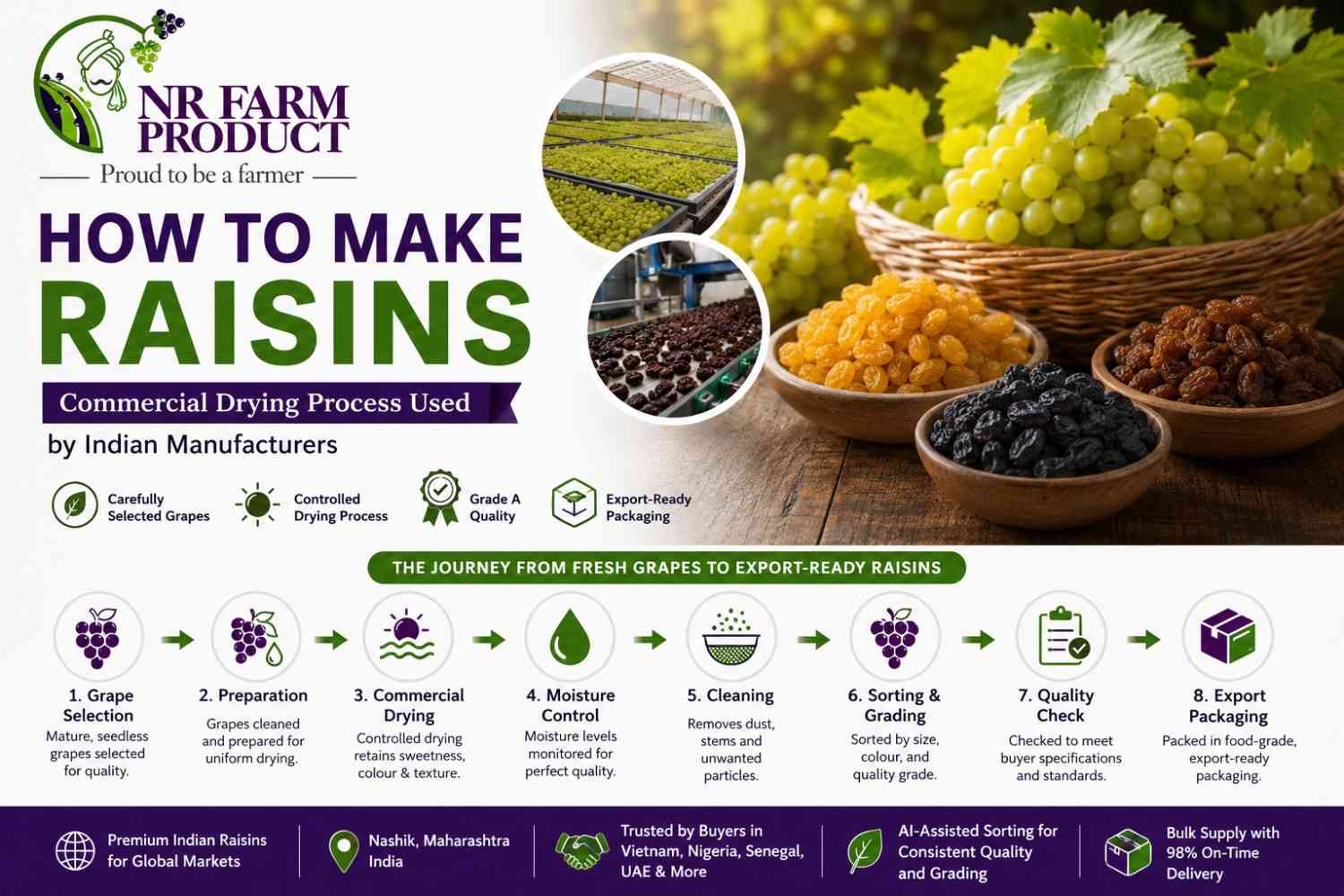
Many people enjoy raisins, but have you ever wondered how to make raisins from fresh grapes on a commercial scale? What looks like a simple dried fruit actually goes through careful grape selection, controlled drying, cleaning, sorting, and grading before it reaches the market. Each step can affect the final raisin's colour, texture, moisture, and shelf life.
In this blog, you will learn about the commercial raisin drying process used by Indian manufacturers, from selecting suitable grapes and preparing them for drying to moisture control, grading, and export-ready packaging. Also, explain what food manufacturers and bulk buyers should check when sourcing raisins.
The Journey from Fresh Grapes: How to Make Raisins
The journey from fresh grapes to export-ready raisins involves several controlled stages. Here are the simple steps to maintain quality and consistency:
- Grape Selection: Mature grapes are selected based on variety, size, sweetness, and quality.
- Preparation: Grapes are prepared for uniform drying.
- Commercial Drying: Grapes are dried under controlled conditions to reduce moisture while retaining sweetness and texture.
- Moisture Control: Drying is monitored to achieve the required moisture level.
- Cleaning: Dried grapes are cleaned to remove unwanted material.
- Sorting & Grading: Raisins are graded by size, colour, appearance, and quality.
- Quality Check: The finished product is checked against buyer specifications.
- Export Packaging: Raisins are packed in food-grade, export-ready packaging for storage and shipping.
Start with the Right Grapes for Better Raisins
The quality of the finished raisins depends heavily on the grapes selected before drying. Manufacturers look for grapes that can produce the required sweetness, size, colour, texture, and moisture level after processing.
- Grape Variety: Seedless varieties are commonly preferred for commercial raisin production.
- Maturity: Fully mature grapes provide better natural sweetness and flavour.
- Berry Size: Uniform berries help achieve more consistent drying.
- Natural Sweetness: Higher natural sugar content contributes to the taste of the finished raisins.
- Fruit Condition: Grapes should be free from significant damage or deterioration before processing.
Prepare Grapes for Commercial Drying
Before drying begins, the selected grapes are prepared to support clean and uniform processing. This stage helps remove unsuitable fruit and ensures the grapes are in proper condition for the drying process.
- Initial Inspection: Grapes are checked for maturity, quality, and visible damage.
- Cleaning: Unwanted material is removed before further processing.
- Batch Preparation: Grapes are prepared according to variety and size to support more consistent drying.
- Careful Handling: Grapes are handled properly to reduce unnecessary damage before dehydration.
Control the Commercial Drying Process
Drying is the key stage that turns fresh grapes into raisins. The goal is to remove moisture at a controlled rate while maintaining the desired sweetness, colour, texture, and overall quality.
- Controlled Drying: Grapes are dried under suitable conditions based on their variety and size.
- Air Circulation: Proper airflow supports more even moisture removal.
- Moisture Reduction: Water is gradually removed as the grapes shrink and develop their typical raisin texture.
- Drying Time: The required time varies with grape variety, berry size, moisture level, and drying conditions.
- Quality Check: Raisins are checked after drying to ensure they meet the required product specifications.
Maintain the Right Moisture Level for Raisin Quality
Moisture control is important after drying because it affects the texture, storage stability, and shelf life of raisins. Manufacturers monitor the dried product to ensure it meets the required specifications.
- Moisture Level: Raisins are checked to achieve the required moisture range.
- Texture: Proper moisture helps maintain the desired softness and chewiness.
- Storage: Suitable moisture levels help raisins remain stable during storage.
- Consistency: Batch-wise moisture checks help maintain consistent quality for commercial buyers.
Clean, Sort and Grade Raisins for Consistent Quality
After drying, raisins go through further processing to prepare them for commercial use. Cleaning, sorting, and grading help remove unwanted material and separate raisins according to buyer requirements.
- Cleaning: Removes stems, dust, and other unwanted material.
- Sorting: Separates raisins based on size, colour, and appearance.
- Grading: Groups raisins according to defined quality specifications.
- Final Inspection: The graded product is checked before moving to packaging.
Pack Raisins for Storage and International Shipping
Once the raisins pass cleaning, sorting, and grading, they are prepared for final packaging. The packaging should protect the product from moisture, contamination, and handling damage during storage and transportation.
- Food-Grade Packaging: Use packaging suitable for direct food contact.
- Bulk Packing: Pack sizes can be selected according to the buyer's quantity requirements.
- Moisture Protection: Packaging should help protect raisins from excess moisture during storage.
- Export Handling: Packing should be strong enough for loading, transportation, and international shipping.
- Labelling: Product details and required shipping information should be included according to the destination market.
Choose the Right Raisins for Your Business
Different food businesses may require different raisin specifications. Before placing a bulk order, buyers should check the best quality key parameters with their application, quality requirements, and market needs.
- Variety: Choose a variety suitable for your product and target market.
- Size & Colour: Confirm the required raisin size, colour, and appearance.
- Seedless Requirement: Check whether your application requires seedless raisins.
- Moisture & Texture: Confirm the required moisture level and texture.
- Quality: Ask about cleaning, grading, and quality inspection.
- Packaging: Select packaging suitable for your storage and shipping requirements.
- Supply Volume: Confirm that the supplier can meet your required bulk quantity consistently.
Why Source Indian Raisins from NR Farm Product?
NR Farm Product supplies quality Indian raisins in bulk to importers, wholesalers, distributors, and food manufacturers. Based in Nashik, Maharashtra, we offer varieties including Golden, Black, Brown, Thompson, Green, Sonaka and many more.
Our raisins are carefully selected, graded, and packed in food-grade, export-ready packaging. We also use AI-assisted sorting technology to help identify and separate raisins based on factors such as size, colour, and visible quality, supporting more consistent grading. We serve buyers in Vietnam, Nigeria, Senegal, Dubai, Abu Dhabi, and other international markets.
Conclusion
Making raisins commercially requires more than drying grapes. The process includes selecting suitable grapes, controlled drying, moisture management, cleaning, grading, and proper packaging to maintain consistent quality.
Understanding how to make raisins helps buyers see what goes into producing a reliable commercial product. If you are looking for quality Indian raisins in bulk, contact NR Farm Product to discuss your variety, quantity, and export requirements.
FAQs
1. How to make raisins at home?
Wash fresh grapes, dry them well, and leave them to dry in the sun or use a food dehydrator until they become smaller, wrinkled, and chewy.
2. Are raisins good for your heart?
Yes, raisins can be part of a heart-friendly diet because they contain fibre, potassium, and antioxidants.
3. How long does it take for a grape to turn to a raisin?
Depending on the drying method and conditions, it can take several days to a few weeks.
4. What are raisins called in India?
Raisins are commonly called kishmish or kismis in India.
5. Which raisin is best in India?
Thompson Seedless, Sonaka, and Golden raisins are popular choices, with the best option depending on taste and intended use