
Uses of Raisins in Nutritional Powders, Bars and Functional Food Products
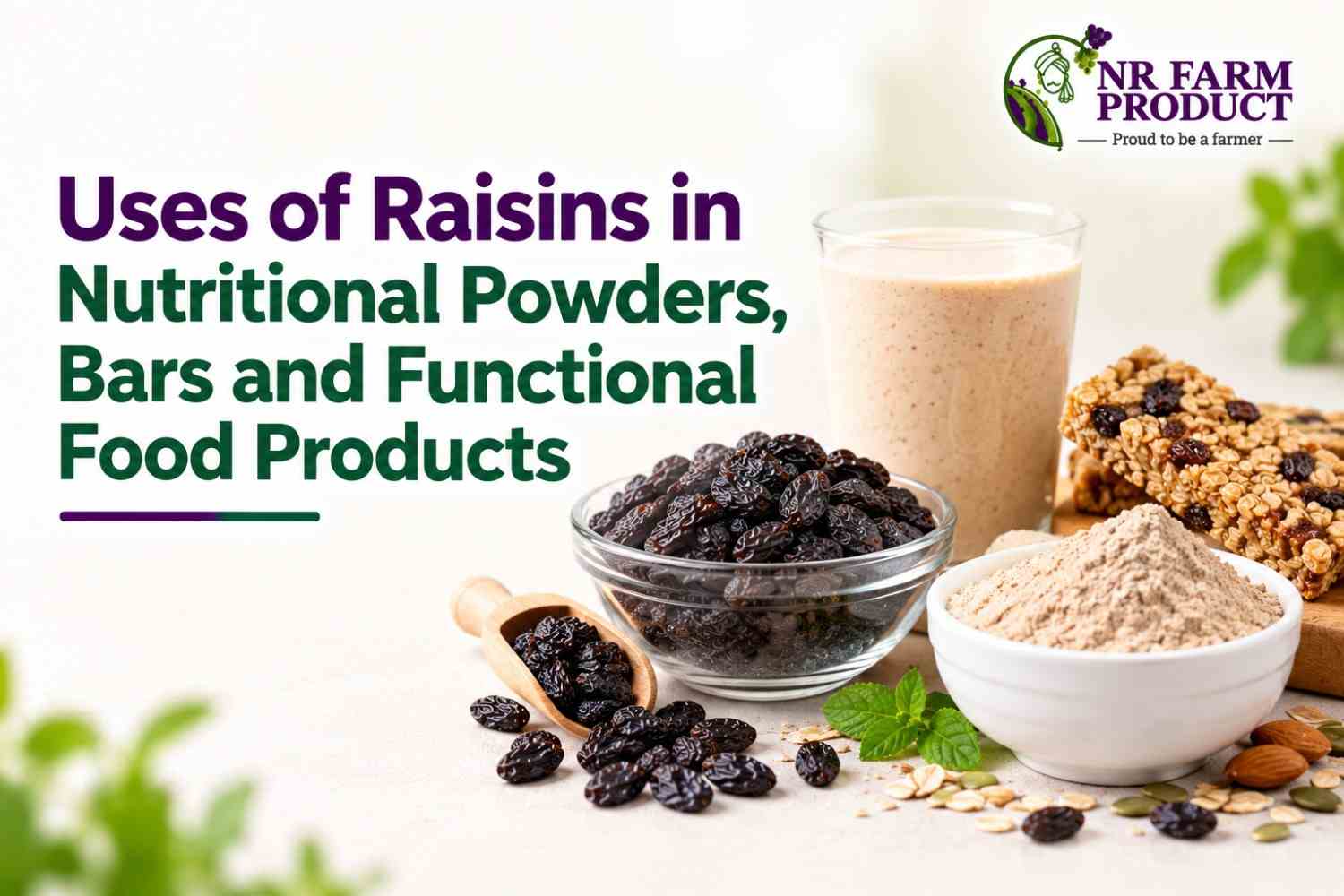
For food manufacturers, ingredient selection affects product taste, texture, nutritional composition and production costs. The uses of raisins in food manufacturing extend beyond bakery products and snacks. Raisins can add natural sweetness, fruit flavour and dietary fibre to nutritional bars, cereal blends and selected functional food products.
Raisins are dried grapes that contain naturally occurring sugars, carbohydrates, and small amounts of minerals. Depending on the format, whole raisins, chopped raisins, raisin paste and raisin powder can serve different purposes in food formulations. Raisin paste can help bind ingredients in snack bars, while whole raisins provide visible fruit pieces.
In this blog, we will learn how manufacturers use raisins in nutritional powders, bars and other food products, how to select the right ingredient format, and what bulk buyers should check before placing an order.
Why Do Food Manufacturers Use Raisins?
Raisins offer a combination of flavour and functional properties that can support product development. Their performance depends on the variety, processing method and final recipe.
- Natural sweetness: Adds a sweet, fruity taste to selected formulations.
- Binding support: Raisin paste can help hold ingredients together in bars and bites.
- Texture: Provides chewiness in snack bars, cereal clusters and fruit-based snacks.
- Dietary fibre: Contributes fibre to the finished product.
- Flavour compatibility: Pairs well with oats, nuts, seeds, cocoa and other dried fruits.
These properties make raisins useful in formulations where manufacturers want to combine fruit ingredients with grains, nuts or protein sources. Product trials are necessary to determine the right quantity and format.
Uses of Raisins in Nutritional Powders
Raisin-derived ingredients can be considered for selected dry food mixes, depending on the product's technical requirements. Manufacturers should assess particle size, moisture, flavour and compatibility with other ingredients.
Fruit-based nutrition mixes: Raisin powder may be used in dry mixes where a fruit flavour and sweetness are required. Its suitability depends on the powder's consistency and moisture level.
Smoothie and beverage mixes: Raisin-derived ingredients may suit certain fruit-based blends. However, ordinary raisin powder may not dissolve completely in liquids, so manufacturers should test dispersion, texture and taste.
Food premixes: Raisin powder can be evaluated for selected dessert mixes and other dry formulations. The ingredient must meet the required shelf-life, handling and processing specifications.
Not every raisin product is suitable for powder manufacturing. Buyers should confirm the ingredient format and request technical specifications before sourcing.
How Are Raisins Used in Protein and Energy Bars?
Raisins can contribute sweetness, fruit flavour and binding support in selected bar formulations. The choice between whole raisins and raisin paste depends on the required texture and manufacturing process.
- Protein bars: Raisin paste can help bind protein ingredients, nuts and other components. Raisin ingredients as a binder and protein-bar base.
- Energy bars: Raisins can be combined with oats, seeds and nuts to produce chewy snack bars.
- Fruit-and-nut bars: Raisins pair with almonds, cashews, peanuts and other dried fruits to create different flavour and texture combinations.
- Cereal bars: Raisin paste or chopped raisins can be tested in cereal-based formulations to improve cohesion and add fruit flavour.
Raisins may help reduce the amount of some added sweeteners in a recipe, but they still contain naturally occurring sugars. Manufacturers must assess the final formulation before making claims such as “no added sugar”.
Other Functional Food Applications
Raisins can be incorporated into several product categories, with the format selected according to the intended use.
|
|
|
|
|
|
|
|
|
|
|
|
|
|
|
|
|
|
|
|
|
For example, whole raisins suit products that need visible fruit pieces, while raisin paste may be more suitable when a uniform mixture is required. The best option depends on processing equipment, moisture requirements and the finished product's specifications.
Raisin Nutrition and Product Development
Raisins contain carbohydrates, naturally occurring sugars and dietary fibre, along with small amounts of vitamins and minerals. Their contribution to a finished product depends on the quantity used and the other ingredients in the formulation.
For manufacturers, raisin nutrition is one consideration when developing fruit-based snacks and nutrition bars. However, raisins are not a complete protein source, and their presence does not automatically make a product nutritionally balanced. The full recipe should be assessed before making nutrition or health claims.
How to Choose Raisins for Commercial Production
Different types of raisins vary in colour, size, flavour and texture. Buyers should select the variety and grade that suit the product's intended use.
- Black raisins: Considered where darker colour and a distinctive fruit appearance are required.
- Golden raisins: Used in selected cereals, bakery products and snack mixes.
- Green raisins: Offer a different colour and appearance for suitable formulations.
- Brown raisins: Commonly used in bakery products, cereal blends and traditional foods.
Before confirming an order, check grade, size, cleanliness, moisture, packaging and storage requirements. Request samples and relevant product specifications to assess suitability.
The raisin price in India varies according to variety, grade, processing, order volume, packaging and market conditions. Compare quotations alongside quality specifications rather than price alone.
Bulk Raisin Supply from NR Farm Product
NR Farm Product, based in Nashik, Maharashtra, India, supplies raisins for B2B buyers, including food manufacturers, wholesalers and importers. Its range includes black, golden, green and brown raisins, subject to availability and order requirements.
Businesses developing nutritional bars, cereal blends, bakery products or mixed nuts with dried fruit can discuss their preferred variety, grade, quantity and packaging needs with the team. For international orders, buyers should confirm destination-specific documentation, labelling requirements, shipping arrangements and delivery terms before placing an order.
Contact us with your product requirements and delivery destination to discuss available varieties, specifications and bulk pricing.
Conclusion
The uses of raisins in food manufacturing include nutritional bars, selected powder blends, cereals, bakery products and fruit-based snacks. Depending on the format, raisins can contribute sweetness, flavour, texture or binding support.
For commercial production, ingredient selection should be based on formulation needs, verified specifications and sample testing. NR Farm Product offers a range of raisins for B2B enquiries, helping buyers discuss suitable varieties and bulk requirements for their intended applications.
Frequently Asked Questions
1. What happens when we eat raisins daily?
Eating raisins in moderation can provide energy, dietary fibre and minerals. However, they contain natural sugars, so portion size matters.
2. What vitamins do raisins provide?
Raisins provide small amounts of vitamins, including vitamin B6 and vitamin K. They are better known for their carbohydrates, fibre and minerals.
3. What are the benefits of raisins for females?
Raisins provide fibre, energy and small amounts of iron and potassium. They can support a balanced diet but are not a treatment for anaemia or hormonal problems.
4. What are the benefits of using raisins in food supplements?
Raisins can add natural sweetness, fruit flavour and dietary fibre to selected nutrition bars, snack mixes and supplement formulations. Raisin powder may also suit certain dry food mixes.
5. Are raisins good for weight loss?
Raisins can be included in a weight-loss diet in controlled portions. They provide fibre, but their calories and natural sugar can add up if eaten in large quantities.