
How Indian Raisins Are Processed for Export Quality?
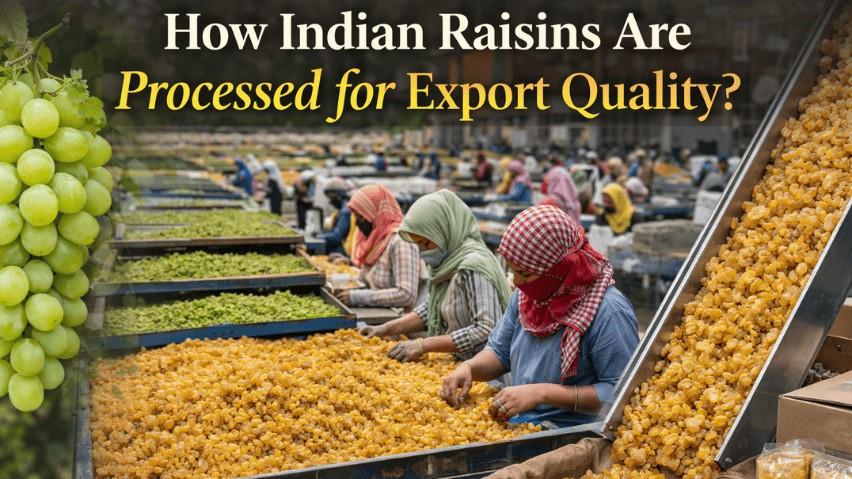
Raisins, also known as kishmish, are dried grapes that are widely used in snacks, sweets, and bakery products. In India, most raisins are made from Thompson Seedless grapes, which are known for their sweetness and quality. The raisin-making process reduces the moisture content of grapes from around 80% to 14 -18%, making them suitable for long storage and export.
Today, raisins are produced using both traditional sun-drying methods and modern raisin processing plants to meet export quality standards. If you are a buyer, exporter, or entrepreneur, understanding this process helps you ensure better quality and sourcing.
Step-by-Step Raisin Making Process
A simple step-by-step process that explains how fresh grapes are cleaned, dried, and processed into high-quality raisins ready for use or export.
Initial Processing & Cleaning
- When raisins arrive at the factory, the first step is cleaning
- They are passed through machines to remove dust, sand, stones, and dirt
- Workers also remove any unwanted materials like leaves or small sticks
- Raisins are then washed using water spray or special washing machines
- This step is important to make raisins clean and safe for export
Cap-Stem Removal & Sorting
- Small stems (called caps) are still attached to some raisins
- Machines remove these stems automatically
- After that, raisins are sorted based on:
- Size (small, medium, large)
- Shape and appearance
- This helps in making the product uniform and attractive for buyers
Laser Sorting & Inspection
- Advanced machines called laser sorters are used
- These machines remove:
- Discoloured raisins
- Unripe or damaged raisins
- Foreign materials (like plastic or dust particles)
- In some factories, X-ray machines are also used
- X-ray helps detect hidden materials like:
- Metal pieces
- Stones
- This ensures 100% safe and export-quality raisins
Drying & Moisture Control
- Raisins must have the right moisture level to avoid spoilage
- Traditionally, raisins are dried in the sunlight
- In modern plants, mechanical dryers are used for better control
- Moisture is reduced to below 15%
- Proper drying helps:
- Increase shelf life
- Prevent fungus or mould
- Maintain quality during shipping
Treatment & Conditioning
- Some raisins, especially golden raisins, are treated for better colour
- A chemical called sulfur dioxide (SO₂) is used to keep the golden look
- This treatment also helps in preserving raisins for a longer time
- However, export markets have strict rules on chemical limits
- So, processing plants carefully control the amount used
Final Inspection & Packing
- Before packing, raisins go through a final quality check
- They are passed through:
- Magnets (to remove metal particles)
- Metal detectors (for safety checks)
- After inspection, raisins are packed in:
- Bulk cartons (5 kg to 12.5 kg) for exporters
- Small consumer packs for retail markets
- Proper packaging ensures:
- Freshness
- Safe transport
- Better shelf life
Varieties of Indian Raisins
Indian raisins are classified by grape type, colour, and drying method, mainly produced in Maharashtra and Karnataka, and are rich in fibre, antioxidants, iron, and potassium.
1. Green Raisins
- Long and thin in shape
- Dried in the shade to keep the green colour
- Taste is sweet with a little tangy flavour
- Very popular in premium markets
- Light golden colour and smooth look
- Made using controlled warm-air drying
- Soft and juicy texture
- Mild sweet taste
- Widely used in baker's and sweets
- Made from black seedless grapes
- Dried under sunlight
- Dark in colour and chewy
- Rich in iron
- Good for health, especially for improving hemoglobin
- Bigger in size and soft inside
- Brown in colour
- Very nutritious and considered healthy
- Commonly used in Ayurvedic medicine and traditional sweets
5. Yellow/Brown Raisins
- Regular raisins dried in sunlight
- Slightly darker colour
- It has a rich and natural sweet taste
- Commonly used in homes and food products
6. Bakery/Industrial Raisins
- Specially processed for the food industry
- Used in:
- Cakes and bakery items
- Cereals
- Packaged foods
- Cleaned and sorted for large-scale use
Maharashtra is the leading state where these grapes are grown, especially in Nashik and Sangli.
Modern Raisin Processing Plant Setup
For export markets, many businesses now use a raisin processing plant to maintain high quality and consistency.
- Raw Material Intake- Machines load dried grapes into the processing line quickly and smoothly.
- Cleaning Systems- Special machines clean raisins by removing dust, sand, and chemicals using water, brushes, and vibration.
- De-stemming / Separation- Machines remove stems and separate unripe or खराब raisins to improve quality.
- Processing Units- Grapes are treated with special solutions to help in faster drying and better final quality.
- Drying Unit- Mechanical dryers reduce moisture below 15% to prevent spoilage and increase shelf life.
- Sorting & Grading- Advanced machines sort raisins by colour, size, and quality, and remove any defects or metal particles.
- Packaging Unit- Automatic machines pack raisins safely using nitrogen gas to keep them fresh for a longer time.
Capacity and Costs
- A small to medium raisin processing plant can handle around 200-500 kg of grapes per hour
- Large commercial plants can process several tons of grapes daily.
- A small setup in India may cost around ₹5-7 lakh for basic machinery and a shed
- A large and advanced processing plant can cost ₹130 lakh or more, depending on capacity and technology
- Higher investment usually means better automation, faster production, and export-quality output
Conclusion
The raisin making process plays a key role in determining the final quality of raisins. Whether using traditional sun-drying or a modern raisin processing plant, each step must be done carefully to meet export standards.
Find out how fresh grapes are carefully turned into premium-quality raisins through a detailed and hygienic process. From careful harvesting and proper drying to advanced sorting and secure packaging, every step plays an important role in maintaining taste, texture, and quality.
At NR Farm Product, modern technology and strict quality checks are used to deliver export-grade raisins that meet international standards. Whether you are a buyer, importer, or distributor, you can trust NR Farm Product for consistent quality, freshness, and reliable supply.
FAQs
1. What is the basic raisin making process?
It includes harvesting, pre-treatment, drying, and packaging.
2. How long does sun-drying take?
It usually takes 4 to 10 days.
3. What machinery is used in a raisin processing plant?
Machines like destemmers, dryers, and laser sorters are used.
4. Can I make raisins at home?
Yes, you can use an oven at 107°C for small batches.
5. Why is pre-treatment important?
It helps remove the wax layer and speeds up drying.
6. Where are raisin processing plants common in India?
Mostly in Maharashtra, especially Nashik and Sangli