
Brown Raisins for Bulk Buyers: Quality, Delivery & Benefits
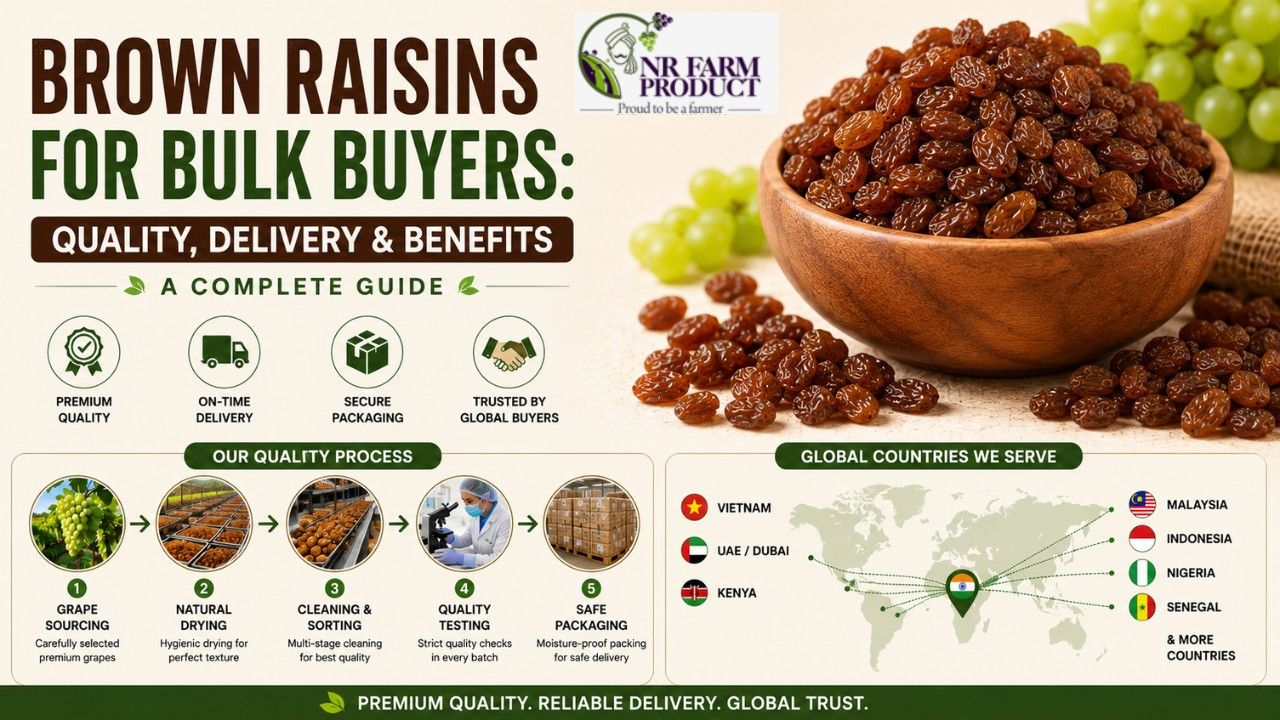
Buying brown raisins in bulk is more than comparing prices. Food manufacturers, importers, wholesalers, and distributors need a supplier that delivers consistent quality, follows food safety standards, and ships orders on time.
Poor-quality raisins, incorrect moisture levels, delayed shipments, or missing export documents can affect production schedules and increase business costs.
In this blog, you will learn what brown raisins are, how to evaluate their quality, common sourcing challenges, delivery processes, export requirements, and what to look for when choosing a reliable brown raisin supplier.
What Are Brown Raisins?
Brown raisins are made by naturally drying Thompson Seedless or Sultanina grapes. During drying, the grapes lose moisture and develop their characteristic brown color, natural sweetness, and chewy texture.
Unlike golden raisins, brown raisins are dried naturally without sulfur dioxide, making them a preferred choice for many food manufacturers looking for a natural ingredient.
Brown raisins are commonly used in:
- Bakery products
- Breakfast cereals
- Snack mixes
- Chocolates
- Dairy products
- Traditional sweets
- Retail packaging
Brown Raisins for Bulk Buyers
Brown raisins are naturally dried seedless grapes widely used in the food processing, bakery, confectionery, snack, and retail industries. When buying in bulk, choose a supplier that offers:
- Consistent moisture levels (15–18%)
- Food safety testing
- Uniform size and color
- Export certifications
- Reliable packaging
- On-time delivery
- Year-round availability
These factors help reduce production delays, maintain product quality, and simplify international sourcing.
Why Do Bulk Buyers Prefer Brown Raisins?
These raisins offer several practical advantages for businesses.
Affordable for Large Orders
Natural drying makes brown raisins more cost-effective than processed varieties, helping manufacturers control ingredient costs.
Long Shelf Life
When packed correctly, brown raisins remain fresh for up to 12 months.
Easy to Use
Their consistent sweetness and texture make them suitable for different food applications without additional processing.
Available Throughout the Year
Reliable suppliers maintain inventory, allowing manufacturers to place orders whenever required.
Common Challenges When Buying Brown Raisins in Bulk
Many buyers face problems after placing an order. The most common issues include:
- High moisture that causes mould during shipping
- Mixed raisin sizes are affecting product consistency
- Dust or foreign matter
- Delayed shipments
- Missing export documents
- Poor communication from suppliers
Choosing an experienced exporter helps reduce these risks and ensures a smoother purchasing process.
How to Check Brown Raisin Quality Before Buying in Bulk
Before confirming an order, buyers should evaluate a few important quality parameters.
|
|
|
|
|
|
|
|
|
|
|
|
|
|
|
|
|
|
|
|
|
|
|
|
Requesting third-party quality reports before shipment adds another level of confidence.
How Brown Raisin Quality Is Maintained
Quality begins long before packing. Every stage of production affects the final product.
1. Controlled Drying
Fresh grapes are dried in covered sheds with proper airflow for around 10–14 days. This helps maintain even moisture while reducing dust contamination.
2. Multi-Stage Cleaning
The raisins pass through several cleaning stages to remove:
- Leaves
- Stems
- Dust
- Small stones
- Other impurities
3. Size Grading
After cleaning, raisins are sorted into different grades so each shipment contains a uniform size.
4. Manual Inspection
Experienced workers inspect random batches to remove damaged or discolored raisins that machines may miss.
5. Food Safety Testing
Each batch is tested for:
- Moisture
- Sugar content
- Foreign matter
- Size consistency
- Microbial safety
Many exporters also verify results through independent laboratories before shipment.
Export Certifications Required for Brown Raisins
Different countries require different export documents. The most common certifications include:
|
|
|
|
|
|
|
|
|
|
|
|
|
|
|
|
|
|
|
|
|
Having complete documentation reduces customs delays.
Must Read: Food Safety Standards for Raisin Exporters
How Bulk Brown Raisins Are Delivered
A reliable delivery process helps maintain product quality from the processing facility to the buyer's warehouse.
Step 1: Order Confirmation
The supplier confirms product specifications, quantity, packaging, and delivery schedule before production begins.
Step 2: Quality Inspection and Packaging
After inspection, raisins are packed in food-grade packaging such as:
- 25 kg bags
- 50 kg cartons
- 1-ton bulk bags
Moisture-resistant liners help protect the product during transportation.
Step 3: Storage Before Shipment
Finished products are stored under controlled temperature and humidity until loading.
Step 4: Shipping
Depending on the destination, shipments may be transported by:
- Road
- Sea freight
- Air and sea combination
The selected route depends on delivery timelines and order size.
Benefits of Choosing a Reliable Brown Raisin Supplier
Working with an experienced supplier offers several business advantages.
Consistent Product Quality
Uniform batches reduce production variations.
Reliable Delivery
Timely shipments help avoid manufacturing delays.
Export Compliance
Complete documentation simplifies customs clearance.
Flexible Packaging
Bulk packaging can be customized for distributors, processors, and retailers.
Stable Supply
Year-round inventory supports uninterrupted production planning.
Countries That Import Brown Raisins from India
Indian brown raisins are exported to many international markets, including:
Asia
- Vietnam
- Malaysia
- Indonesia
- UAE
Africa
- Kenya
- Nigeria
- Senegal
Domestic Market
Indian manufacturers and distributors across Mumbai, Delhi, Bengaluru, Hyderabad, and other major cities also purchase brown raisins in bulk.
Why Many Bulk Buyers Choose NR Farm
For businesses that require dependable bulk supplies, supplier reliability is just as important as product quality.
NR Farm follows a structured production and export process that includes:
- Carefully sourced grapes
- Controlled drying
- Multi-stage cleaning
- Batch-wise quality testing
- Food-grade packaging
- Export documentation support
- Consistent communication during shipping
With experience supplying customers across multiple countries, NR Farm focuses on delivering consistent quality and dependable service for long-term business relationships.
How to Choose the Right Brown Raisin Supplier
Before placing a bulk order, ask these questions:
What moisture level do you maintain?
The ideal moisture level is between 15–18%.
Do you provide quality test reports?
Independent laboratory reports improve transparency.
Can you supply throughout the year?
Reliable inventory reduces sourcing risks.
Do you offer custom packaging?
Different industries require different packaging sizes.
Can you manage export documentation?
Complete paperwork helps prevent customs delays.
Conclusion
Buying brown raisins in bulk requires more than finding the lowest price. Product consistency, food safety, export compliance, packaging, and reliable delivery all play an important role in maintaining a smooth supply chain.
By evaluating quality standards, certifications, and supplier capabilities before placing an order, businesses can reduce operational risks and ensure uninterrupted production.
For buyers looking for a trusted brown raisin exporter in India, NR Farm combines quality control, export expertise, and dependable delivery to support long-term sourcing requirements.
Frequently Asked Questions
1. What is the ideal moisture level for export-quality brown raisins?
Most export-quality brown raisins maintain a moisture level between 15% and 18% to reduce the risk of mould during transportation.
2. What packaging options are available for bulk brown raisins?
Common packaging includes 25 kg food-grade bags, 50 kg cartons, and 1-ton bulk bags, depending on buyer requirements.
3. How long can brown raisins be stored?
When stored in suitable conditions and packed correctly, brown raisins generally have a shelf life of up to 12 months.
4. Which industries use brown raisins?
Brown raisins are widely used by bakeries, food processors, cereal manufacturers, confectionery companies, snack producers, and retail brands.
5. What export documents are required for brown raisins?
The required documents typically include a phytosanitary certificate, commercial invoice, packing list, bill of lading, and other certifications requested by the importing country.
6. Why is supplier reliability important for bulk buyers?
A reliable supplier helps maintain consistent product quality, reduces shipment delays, provides complete documentation, and supports long-term business growth.