
Modern Technology Used in Raisin Processing
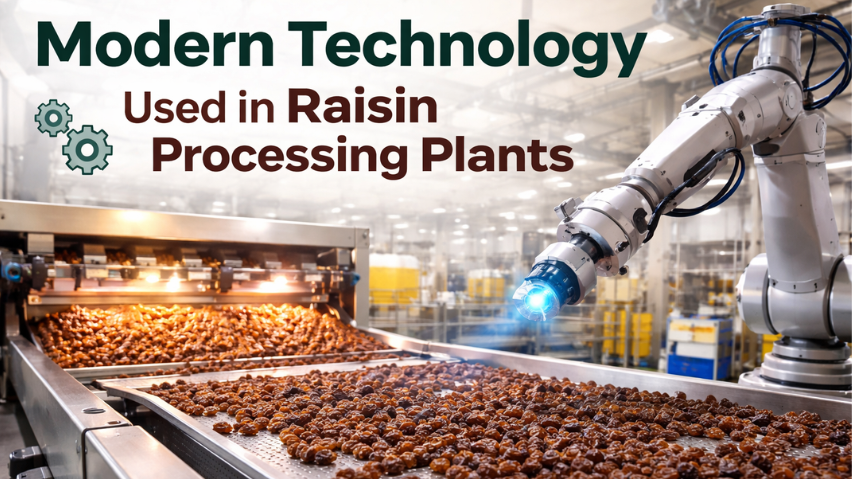
The global demand for premium raisins is rising fast, with buyers expecting top quality, safety, and consistency. But producing export-grade raisins today takes more than just good grapes; it requires smart, advanced technology.
Modern processing plants use automated washers, intelligent sorting systems, and precision packing machines to deliver clean, uniform, and high-quality raisins. These innovations ensure every batch meets strict international standards, helping exporters consistently supply world-class products.
In this article, you will learn which technologies matter most to B2B buyers, why they are important, and how leading global exporters use them to transform raw raisins into consistent, high-quality finished products.
Why is Modern Technology Important in Raisin Processing?
Why should you pay attention to the processing technology behind raisins? Because it's the key factor that determines what you get.
Food Safety and Hygiene
Advanced, modern processes eliminate contaminants (dust, insects, stones, glass, and bacteria). Human eyes don't always catch everything when sorting manually. Technological systems will.
Consistent Quality
With older technologies, quality could vary from batch to batch; technology now ensures all raisins meet the same high-quality standard. This is important to you as a distributor when purchasing large quantities for resale.
Reduce Waste/Fewer Rejections
With better quality sorting and processing, fewer defective raisins will be shipped to you, saving money as well as maintaining a good reputation with your customers.
Export Compliance
Compliance with APEDA, FSSAI, and ISO is built into modern processing technologies. Therefore, you won't face unexpected export challenges, nor will you incur expensive delays due to rejection at customs.
Key Modern Technologies Used in Raisin Processing
Modern processing facilities use advanced technology to improve raisin quality, safety, and consistency. These systems remove defective raisins and ensure proper sanitation, helping meet global export standards.
AI-Based Colour Sorters
This has changed the game. Using artificial intelligence, our assistant can determine the color, shape, and texture of each raisin, as well as identify discolored, broken, or contaminated raisins and remove them from production immediately.
Accuracy rate = 99%+. As this system learns over time, it continues to improve performance on a daily basis.
Metal Detection and Optical Sorting
These systems detect and eliminate glass, stones, metal, or other foreign materials, a critical requirement for food safety as well as export compliance.
Automatic Grading and Washing Systems
With the use of machines that are able to grade raisins by both size and quality, along with hygienic washing of raisins to remove dust and debris without damaging the raisins, the raisin industry is able to ship raisins of consistently high quality.
Advanced Moisture Control and Packaging
Modern packaging systems control the moisture content of raisins, allowing for longer shelf life and less spoilage during long-distance shipping.
Traditional vs. Modern Processing- Comparison Table
The raisin processing industry has shifted from manual methods to technology-driven systems. While traditional methods are still used, they fall short of modern standards in quality, safety, and consistency, especially for export markets.
|
|
|
|
|
|
|
|
|
|
|
|
|
|
|
|
|
|
|
|
|
|
|
|
Benefits of Modern Raisin Processing for B2B Buyers
Current technology provides you with the ability to improve your business:
- Consistent quality: no more surprises with your shipments! Every carton shipped will meet your specifications.
- Lower rejection rates: We meet international standards at all times.
- Improved margins: a premium product can be sold for more.
- Reliable supply: many orders can be processed; all orders are processed quickly and accurately.
- Compliance assurance: completely and legally export-ready (fully certified by FSSAI and APEDA).
How NR Farm Uses Modern Technology in Raisin Processing?
At NR Farm Products, we use modern technologies across our raisin processing to ensure high quality, safety, and consistency. Advanced sorting, strict quality checks, and export-ready packaging help us meet industry standards and buyer requirements.
Advanced AI-Powered Processing
NR Farm uses deep learning color sorters with 99%+ accuracy. The system automatically removes discolored, broken, and contaminated raisins. This ensures uniform batches, exactly what B2B buyers need.
Strict Quality Testing & Certifications
Every batch is lab-tested for safety and compliance. NR Farm holds HACCP certification and maintains export-grade quality standards. They export to Vietnam, Kenya, Oman, Ethiopia, Kuwait, Nigeria, and many other countries worldwide.
Export-Ready Packaging & Global Delivery
Moisture-proof packaging maintains freshness during shipping. Quick turnaround on bulk orders. Dedicated support for reliable B2B partnerships.
Conclusion
Today's technology has a significant influence on the production of quality raisins. An example of this would be how technology provides safer processing techniques. ensuring consistency in quality through automation and demonstrating compliance with international requirements by providing traceability for the product.
When manufacturers/importers are evaluating potential suppliers, selecting one who uses advanced technological processing equipment will reduce the manufacturer's/importer's risk, provide higher quality raisins, and guarantee an uninterrupted supply of products. Manufacturers should always do business with suppliers that utilize technology to produce high-quality raisins.
FAQs
1. What is used to preserve raisins?
A sulfur dioxide treatment is often used to preserve the color and flavor of raisins.
2. How can we preserve dry fruits for a long duration?
Store dry fruits in airtight containers in a cool, dry place or refrigerate them. Keep away from moisture, heat, and direct sunlight.
3. How many years do raisins last?
Raisins can last up to 6-12 months at room temperature and up to 1-2 years when stored in the refrigerator.
4. How are raisins made from grapes?
Raisins are made by drying fresh grapes under the sun or using mechanical drying systems until the moisture is removed.
5. How to stop raisins from sinking?
Coat raisins lightly with flour before adding them to the batter. This helps them stay evenly distributed instead of sinking.